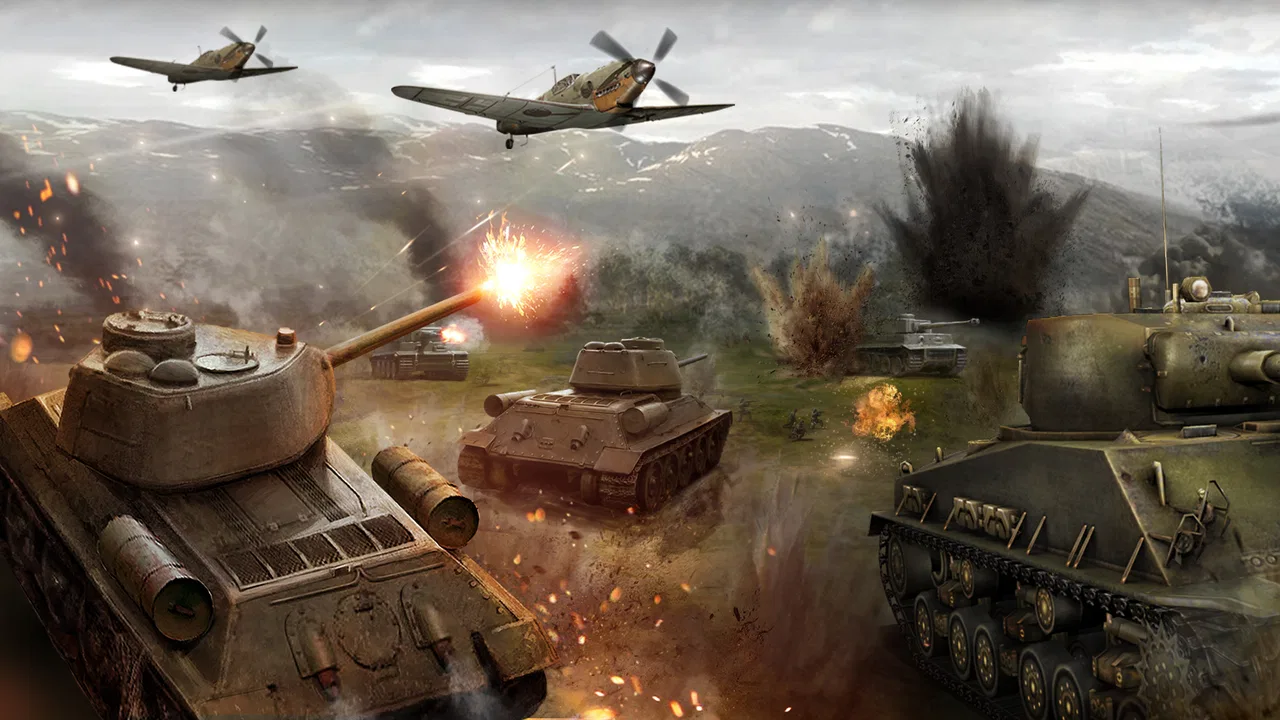
World War: Machines Conquest
- 4.3
- Rating
- 10.00M
- Installs
- Free
- Price
 Analysis by App-foxy
World War: Machines Conquest is the kind of mobile strategy game I open when I want a long-term project rather than a quick match. Its World War II setting gives the experience a clear identity, but the real appeal comes from gradually building an operation, making decisions about limited time and resources, and deciding how aggressively I want to compete. It is free to download, which makes trying it easy, although the presence of optional purchases means the value question depends heavily on how seriously you plan to play.
After spending time with it, my impression is that this is best understood as a persistent strategy game built for regular check-ins. It is not simply a history-themed action game, and it is not the right choice if you want a complete campaign that can be finished in a weekend. The developer, NDREAM Corp., has shaped it around ongoing progress, planning, and the satisfaction of seeing a base and army become more capable over time.
Building a World War II strategy routine
The first thing I noticed is how easily the game turns a few spare minutes into a longer session. I might begin by checking progress, collecting what has finished, and choosing the next improvement. Then a strategic question appears: should I strengthen the economy, prepare military units, research something useful, or save resources for a larger goal? That chain of decisions is where the game earns its place in the strategy category.
You May Also Like

 Blood Strike: 2.5 Anniversary
Blood Strike’s Loadouts Turn Every Drop Into a Tactical Gamble
A close look at Blood Strike’s custom loadouts: how fast access to signature weapons reshapes its battle royale rhythm, rewards preparation, and narrows the gap between fights.

 Pandora - Music & Podcasts
Pandora’s Music Is Easy to Start, but Harder to Recover
Pandora’s strength is its low-effort path from a seed to a station. Its weak spot is how much confidence it asks you to place in connection, setup, and quiet recovery.

 8 Ball Pool
 Is Built on Rivalries, Rematches, and Routine
A close look at the rivalries, rematches, shared routines, and unanswered safety questions that turn a quick pool match into a persistent mobile community.

 Samsung Music
’s Quiet Strength Is Playing What You Already Own
Its reach comes less from spectacle than from dependable access to a personal library. That simplicity is both the app’s strongest retention engine and its ceiling.

 AccuWeather: Weather Radar
AccuWeather Review: A Quick, Clear Forecast for Everyday Decisions
For everyday plans, the best forecast is the one you can understand quickly. AccuWeather makes rain timing, radar, and local conditions easy to act on, with a few trade-offs.

 Hill Climb Racing
Why Hill Climb Racing Still Turns Crashes Into One More Run
A tiny car, a bumpy hill and one more upgrade: Hill Climb Racing keeps resurfacing because its simple chaos makes every near-miss feel personal.
More From Our News Desk



The World War II theme is more than a visual coat of paint. It establishes the tone of the menus, the military objectives, and the feeling that every upgrade belongs to a larger campaign. Still, I would not approach this as a detailed historical simulation. The experience is designed for mobile play, so convenience and readable progression matter more than reproducing every historical limitation or battlefield condition.
That distinction is important. Players looking for a realistic tactical recreation may find the presentation lighter than expected. Players who enjoy managing a growing military operation will probably appreciate the accessible structure. I found the game most enjoyable when I treated it as a strategic routine: make a plan, check the consequences, and return later to see whether the decision paid off.
What the free entry really means
The game is free, so there is no purchase required before I can find out whether its style suits me. That is a genuine advantage. I can install it, learn the basic rhythm, and decide whether the long-term format appeals to me without paying upfront. For a player who is cautious about buying unfamiliar strategy games, this lowers the barrier considerably.
There are in-app purchases ranging from $0.99 to $329.99 per item. I see that range as the most important financial detail for anyone considering serious play. Free access does not mean every possible shortcut or convenience is free. A casual player can begin without spending, while a competitive player may feel more pressure to examine purchases carefully before committing money.
I would not call the game good value simply because the download costs nothing. The better question is whether the free progression gives you enough room to enjoy planning without feeling pushed toward spending. That answer will vary with your patience and goals. If I am happy to progress steadily, the free entry is attractive. If I want to advance quickly or compete at a demanding level, the purchase range makes budgeting part of the experience.
My practical advice is to play long enough to understand the normal pace before buying anything. Early enthusiasm can make a shortcut look essential when it is really just convenient. I would also decide in advance whether I am playing for relaxation, completion, or competition. Those three approaches produce very different ideas of value in a persistent strategy game.
Where the value comes from
The strongest value is not a single feature; it is the way several small decisions connect. An upgrade affects what I can do next, and that changes how I think about resources and timing. When I plan well, progress feels earned rather than random. That sense of continuity is more satisfying to me than the instant rewards found in many short mobile games.
A useful everyday scenario is a commute or lunch break. I can check the current state of my operation, make one or two decisions, and close the game without needing a full uninterrupted session. Later, I return to review the result and adjust the plan. This makes it a comfortable companion for people who like games that fit around a schedule instead of demanding constant attention.
There is also value in learning the game’s rhythm. At first, I tended to spend resources as soon as they became available. With more experience, I became more deliberate: I considered whether a small improvement would solve an immediate problem or whether saving would make a larger objective possible. That change in behavior is one of the game’s less obvious strengths because it rewards restraint, not just activity.
Another useful approach is to separate routine actions from meaningful decisions. I try not to treat every available button as equally urgent. Collecting progress and starting a basic task can be automatic, but choosing where to invest limited resources deserves more thought. This simple habit reduces waste and makes the strategic layer easier to understand.
The game also works for players who enjoy watching a project mature. A new player may focus on unlocking and learning, while a returning player can think about efficiency and preparation. That gradual shift from discovery to optimization gives the experience more depth than a purely casual title, even though the controls and presentation remain approachable.
Tradeoffs hidden behind the convenience
The same persistent structure that creates satisfaction can also create friction. Progress is tied to returning, waiting, and making decisions over time. If I want a game that gives me a complete tactical challenge immediately, this format can feel slow. The design is more comfortable with patience than with urgency.
There is a mental cost to maintaining a long-running operation as well. I need to remember what I was saving for, which improvement mattered most, and whether my current plan still makes sense. That is enjoyable when I am in the mood for management, but it can feel like another task when I only want a quick distraction.
The World War II setting may also create expectations the game does not fully satisfy for every audience. I would skip it if my main interest is a historically rigorous experience with detailed battlefield simulation. The theme provides atmosphere and direction, but the game’s appeal is its mobile strategy loop rather than academic accuracy.
Free-to-play economics are another tradeoff. The broad purchase range means I would be careful about confusing convenience with necessity. A purchase can make progress feel smoother, but smoother progress is not automatically better value. For me, spending only makes sense when I already understand the game and can identify a specific improvement to my enjoyment, not merely a desire to remove temporary impatience.
Players who dislike timers, repeated resource management, or long-term development should think twice before installing. The game is not a good substitute for a premium strategy title that gives access to a complete experience after one payment. It is also less suitable for someone who wants a simple offline pastime with no ongoing decisions.
How it compares with familiar strategy alternatives
Compared with a traditional premium strategy game, World War: Machines Conquest is easier to sample because the initial cost is free and the experience is divided into mobile-sized decisions. The tradeoff is that the ongoing purchase structure and persistent progression can feel less straightforward than paying once and receiving the whole design.
Compared with a fast competitive strategy game, it gives me more time to think about development and preparation. The pace is less about reacting instantly and more about arranging the next stage of progress. That makes it friendlier to players who enjoy planning, although action-focused players may find it too measured.
Compared with a simple city-building game, the military theme gives choices more urgency and purpose. I am not only decorating or expanding; I am thinking about readiness and priorities. On the other hand, anyone who wants purely peaceful construction may find the war setting less comfortable.
Its most distinctive position is between those alternatives. It offers enough ongoing management to reward commitment, but its free entry lets a curious player test the waters. I would choose it over a premium title when I want a continuing mobile project. I would choose a premium strategy game instead when I want predictable costs and a self-contained campaign.
Who will get the most from it
I think the best audience is made up of players who enjoy gradual progress, military themes, and decisions that remain meaningful after the current session ends. If you like checking a plan, adjusting it, and seeing the result later, the structure should feel natural. The game is also a reasonable fit for someone who wants strategy that can be played in short visits rather than only during long evenings.
It may suit newer strategy players because the setting gives the systems a clear direction. You do not need to begin with the expectations of a tournament player. I would start slowly, learn which decisions affect the next stage, and avoid spending until the normal progression feels familiar.
More experienced players may enjoy the optimization side. The interesting challenge is not merely doing more; it is deciding what deserves attention first. A player who can resist impulsive upgrades and maintain a longer plan will probably get more from the free experience than someone who constantly chases immediate progress.
I would recommend skipping it if you want a one-session game, a fully offline experience, or a historically exact simulation. I would also skip it if the possibility of optional spending makes persistent games stressful. There is nothing wrong with preferring a premium strategy title where the financial decision is made once and the rest of the experience is easier to predict.
Device and account expectations
The game supports Android devices running version 6.0 or later, so its stated system requirement is relatively approachable for players using older compatible phones. The current version is 10375, which is useful to check when troubleshooting installation or deciding whether a device is ready. I would still keep enough storage available for the installation and future updates, even though I would not treat the minimum operating system as a guarantee of identical performance on every phone.
Its age rating is Everyone 10+, which places it in a broadly accessible range while still acknowledging that the war theme is not intended for very young children. Parents should consider whether a military setting and optional purchases fit their household expectations. The free download makes trying it convenient, but purchase controls are worth treating seriously on a shared device.
The game has reached over ten million installs, with an average rating of 4.3 from around one hundred eight thousand ratings and roughly three thousand written reviews. Those figures suggest a substantial player base and a generally positive reception, but I would use them as context rather than as a replacement for personal testing. Strategy games are especially dependent on whether a player enjoys the pace and spending model.
My practical way to start
On a first run, I would avoid trying to optimize everything at once. I would learn the basic sequence, observe how long progress takes, and identify which resources regularly become limiting. That information is more valuable than copying an aggressive approach before I understand the consequences.
I would also set a personal rule for purchases. For example, I might play free for several sessions, decide whether I am enjoying the decisions rather than merely chasing rewards, and only then consider a small purchase. The available items begin at $0.99, but the upper end reaches $329.99, so a clear boundary protects the game from turning into an unplanned expense.
One of my favorite habits is to finish a session by choosing a next objective rather than leaving the game with everything undecided. That way, the next visit has a purpose. It could be improving a weak area, preparing for a larger task, or simply maintaining steady progress. This makes short sessions feel productive and prevents aimless tapping.
I would also judge success by consistency, not speed. The game becomes more enjoyable when I stop comparing my progress with an imagined ideal and instead build a routine that fits my own time. That is particularly important in a free-to-play strategy game, where impatience can make optional purchases appear more important than they really are.
My recommendation after weighing the cost
World War: Machines Conquest is worth trying if you want a free-to-start World War II strategy game built around long-term development. Its strongest qualities are the connected decision-making, the manageable short-session routine, and the satisfaction of watching a military operation grow through your choices. NDREAM Corp. has aimed at players who enjoy returning to a project, not merely finishing a quick challenge.
My recommendation becomes more cautious once spending enters the picture. The free access is a real benefit, but the optional purchase range means I would not promise equal value for every type of player. A patient player who enjoys gradual progress can get a worthwhile experience without rushing to pay. A competitive or impatient player should decide on a budget before becoming invested.
In the end, I would install it when I am in the mood for a continuing strategy routine, especially if I want something more involved than a casual builder but less immediate than a fast battlefield game. I would skip it in favor of a premium alternative when predictable one-time pricing, historical depth, or a complete offline campaign matters more than free entry.
For me, the final verdict is positive with a clear condition: the best value comes from enjoying the planning itself, not from trying to buy your way through it. If that sounds like your kind of mobile game, the free starting point makes it easy to find out. If it does not, the theme alone is unlikely to overcome the slower progression and ongoing purchase structure.
FAQs for World War: Machines Conquest
01What is the main objective of World War: Machines Conquest?
World War: Machines Conquest is a strategic war game where players build and command their own army of machines to conquer territories and defeat opponents. The main objective is to strategically manage resources, upgrade machines, and form alliances to dominate the battlefield and expand your empire.
02Is World War: Machines Conquest available for both Android and iOS?
Yes, World War: Machines Conquest is available for download on both Android and iOS platforms. Players can enjoy the game on their smartphones or tablets by accessing the respective app stores and searching for the game to download and install it.
03Are there in-app purchases in World War: Machines Conquest?
Yes, World War: Machines Conquest offers in-app purchases. Players can buy various resources, upgrades, and exclusive machines to enhance their gameplay experience. While the game is free to download, these purchases can provide an advantage in progressing faster and stronger.
04Can I play World War: Machines Conquest offline?
World War: Machines Conquest requires an active internet connection to play. This is because the game includes online multiplayer features, real-time battles, and alliances, which necessitate an internet connection for players to interact and compete globally.
05What age rating is appropriate for World War: Machines Conquest?
World War: Machines Conquest is generally rated for players aged 12 and up. The game contains mild violence and strategic military themes, making it suitable for teenagers and adults. Parents are advised to review the game content to ensure it aligns with their expectations for younger players.
Pros
- Stunning graphics with realistic battlefields.
- Intuitive controls for seamless gameplay.
- Diverse range of war machines to choose from.
- Engaging multiplayer battles enhance strategy.
- Frequent updates with new content and features.
Cons
- Requires a stable internet connection to play.
- In-app purchases can be quite expensive.
- Occasional glitches in multiplayer mode.
- High battery consumption during long sessions.
- Can be challenging for beginners without guidance.

World War: Machines Conquest
Gallery